• Skip to primary navigation
  • Skip to main content
  • Skip to primary sidebar
The BarBend Logo in white.

BarBend

The Online Home for Strength Sports

  • Strength
    • Best Home Gym Machines
      • Best Functional Trainers
      • Best Squat Racks
      • Best Budget Home Gym Equipment
      • Best Cable Machines
      • Best Weight Benches
      • Best Smith Machines
      • Best Smart Home Gyms
    • Best Barbells
      • Best Budget Exercise Bikes
      • Best Budget Barbells
      • Best Powerlifting Barbells
      • Best Barbells For Women
    • Best Kettlebells
      • Best Adjustable Kettlebells
    • Best Dumbbells
      • Best Adjustable Dumbbells
    • More Strength Equipement
      • Best Resistance Bands
      • Best Weight Plates
      • Best Bumper Plates
      • Best Slam Balls
      • Best Weighted Vests
      • Best Weight Sleds
      • All Other Strength Equipment
    • Training
      • Exercise Guides
        • Deadlift
        • Bench Press
        • Back Squat
        • Overhead Press
        • Lat Pulldown
        • Shoulder Exercises
        • Chest Exercises
        • Ab Exercises
        • Quad Exercises
        • Biceps Exercises
      • Training Guides
        • Beginner’s Guide to the Gym
        • How to Build Muscle
        • Guide to Muscle Hypertrophy
        • How to Train on a Cut
      • Workouts
        • Back Workouts
        • At-Home Workouts
        • Chest & Back Workouts
        • Full-Body Workout
        • HIIT Workouts
        • Bodybuilding Workouts
        • Farmer’s Carry Workouts
      • Programs
        • 5×5 Program
        • Bodybuilding Programs
        • Push-Up Program
        • Pull-Up Program
        • 5/3/1 Program
        • Powerbuilding Program
        • German Volume Training
        • Build Your Own Program
    • News
      • CrossFit
      • Strongman
      • Bodybuilding
      • Powerlifting
      • Weightlifting
      • HYROX
    • Individual Strength Equipment Reviews
  • Nutrition
    • Best Pre-Workouts
      • Best Non-Stim Pre-Workouts
      • Best Pre-Workout for Women
      • Best Pre-Workouts for Men
      • Strongest Pre-Workouts
    • Best Protein
      • Best Protein Powder for Men
      • Best Whey Isolate Protein Powders
      • Best Protein Powder For Women
      • Best Tasting Protein Powders
      • Best Protein Bars
      • Protein by Goal
        • Best Mass Gainer
        • Best Protein Powder for Weight Loss
        • Best Protein Powder for Weight Gain
        • Best Protein Powder for Muscle Gain
      • Protein by Diet
        • Best Egg White Protein Powder
        • Best Keto Protein Powder
        • Best Organic Protein Powder
        • Best Vegan Protein Powders
    • Best Creatine
      • Best Creatine Gummies
      • Best Creatine For Women
      • Best Creatine for Men
    • Best BCAA’s
      • Best BCAA’s for Women
    • Best Fat Burners
      • Best Fat Burners For Women
      • Best Non-Stim Fat Burners
      • Best Fat Burners For Men
    • Other Nutrition Products
      • Best Meal Replacements
      • Best Nitric Oxide Supplements
      • Best Electrolyte Supplements
      • Best Greens Powder
        • Best Greens Powder for Pregnancy
      • Best Meal Delivery Services
        • Best Budget Meal Delivery Services
        • Best Vegan Meal Delivery Service
        • Best Healthy Meal Delivery Service
        • Best Meal Delivery Service for Weight Loss
        • Best Paleo Meal Delivery Services
        • Best Multivitamins for Women
        • Best Multivitamins for Men
        • Best Supplement Stacks
        • Best Multivitamins
    • Guides
      • Diets
        • Carb Cycling
        • Vertical Diet
        • Reverse Dieting
        • Carnivore Diet
        • Ketogenic Diet
        • Intermittent Fasting
        • IIFYM Diet
      • Muscle Gain
        • How to Dirty Bulk
        • Go From Cutting to Bulking
        • Eat These Carbs
        • How to Eat for Muscle
      • Fat Loss
        • Macros for Fat Loss
        • Calorie Deficits
        • Natural Fat Burners
        • Cut 2 Pounds Weekly
      • Supplement Guides
        • Pre-Workout
        • Whey Protein
        • Mass Gainers
        • Greens Powders
        • Creatine
        • BCAAs
      • Daily Protein Needs
      • Pre- and Post-Workout Nutrition
      • Foods With Creatine
      • Bulking Tips
    • Individual Supplement Reviews
  • Conditioning
    • Best Treadmills
      • Best Manual Treadmills
      • Best Compact Treadmills
      • Best Budget Treadmills
      • Best Treadmills Under $2000
      • Best Treadmills Under $1000
      • Best Treadmills For Tall People
      • Best Commercial Treadmills
      • Best Curved Treadmills
      • Best Under Desk Treadmills
    • Best Rowing Machines
      • Best Water Rowing Machines
      • Best Budget Rowing Machines
      • Best Compact Rowing Machines
      • Best Foldable Rowing Machines
      • Best Air Rowing Machines
    • Best Exercise Bikes
      • Best Recumbent Bikes
      • Best Folding Exercise Bikes
      • Best Exercise Bikes For Seniors
      • Best Air Bikes
    • Best Ellipticals
      • Best Budget Ellipticals
      • Best Compact Ellipticals
      • Best Rear Driving Ellipticals
      • Best Ellipticals For Seniors
      • Best Under Desk Ellipticals
      • Best Ellipticals Under $1000
    • Other Conditioning Products
      • Best Jump Ropes
      • Best Plyometric Boxes
      • Best Speed Sleds
      • Best Agility Ladders
      • Best Vertical Climbers
      • Best Commercial Stair Climbers
      • Best Affordable Stair Climbers
    • Individual Cardio Equipment Reviews
  • Recovery
    • Best Cold Plunges
    • Best Saunas
      • Best Infrared Sauna
    • Best Massage Guns
      • Best Mini-Massage Guns
    • Best Compression Boots
    • Best Back Massagers
    • Best Massage Chairs
    • Other Recovery Tools
      • Best Inversion Tables
      • Best Vibrating Massage Rollers
      • Best Massage Balls
      • Best Ice Wraps
      • Best Foam Rollers
    • Recovery Guides
  • Fitness Accessories
    • Fitness Tech
      • Best Fitness Apps
        • Best Weightlifting Apps
        • Best Workout Programs
        • Best Cycling Apps
        • Best Treadmills Apps
        • Best Workout Streaming Services
        • Best Workout Apps
        • Best Running Apps
    • Best Bluetooth Earbuds
    • Best Digital Scales
      • Best Smart Scales
    • Best Fitness Trackers
      • Best Heart Rate Monitors
      • Best Pedometers
      • Best Stopwatches
    • Apparel
      • Best Running Shoes
      • Best Weightlifting Shoes
      • Best Cross Training Shoes
      • Best Gym Shorts
      • Best Sports Bras
      • Best Trail Running Shoes
    • Support Gear
      • Best Lifting Straps
      • Best Gym Bags
      • Best Lifting Gloves
      • Best Wrist Wraps
      • Best Lifting Chalk
      • Best Dip Belts
      • Best Pull Up Assist Bands
      • Best Lifting Belts
Home » Exercise Guides » 3 Back Squat Alternatives for Cranky Shoulders

3 Back Squat Alternatives for Cranky Shoulders

Try these out if standard back squats are hurting more than they're helping.

Written by Shane McLean
Last updated on July 25th, 2023

It is difficult to understate the benefits of back squats for strength athletes. They help build up the glutes, quads, hips, and require a stable core. Squat strength is essential for Olympic lifting, deadlifting prowess (leg drive), and is an applicable movement in pretty much every sport. Not to mention it’s a functional movement for everyday life. Hinging and lifting is something that you should hopefully be able to do well into your later years.

Editors note: This article is an op-ed. The views expressed herein are the author’s and don’t necessarily reflect the views of BarBend. Claims, assertions, opinions, and quotes have been sourced exclusively by the author.

But back squats are not necessarily for everyone. Sometimes limitations, such as a shoulder injury, can make it uncomfortable to put a barbell on one’s back properly. If you fall into that category, then the alternatives we’ll delve into here can help you get benefits of back squatting without risking injury.   

What’s Needed For a Good Back Squat
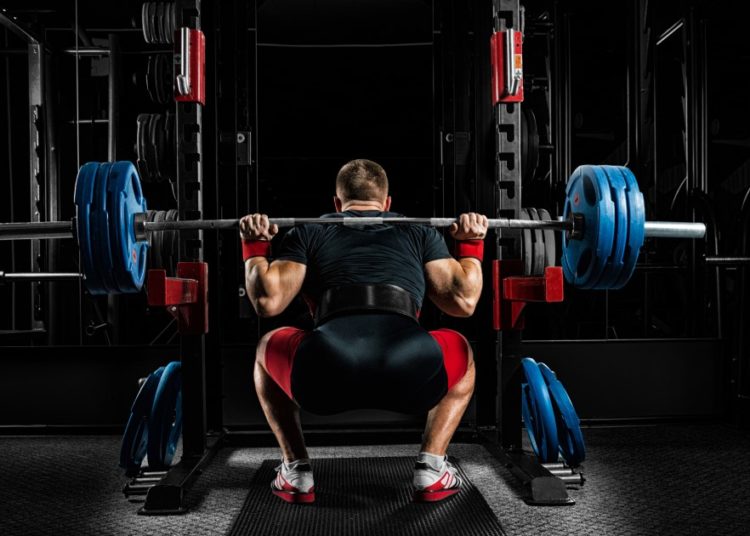
Back Squat
Image via Shutterstock/Andy Gin

First, let’s understand what is needed form-wise for a good back squat, as that overlaps with the alternatives. There are a ton of cues, techniques, and methods when it comes to the back squat, but the following three are non-negotiable.

  1. Lumbar spine remains in a neutral position throughout the movement.
  2. Feet stay planted on the ground and stable throughout the entire rep. Ankle mobility plays a huge role here. 
  3. The load stays in a vertical line over the midfoot. 

The first two points are usually solved by reducing the range of motion. Some ways to do this are box squats or placing a weight plate underneath your toes or heels to compensate for any lack of ankle mobility.

However, it can be difficult and sometimes painful to get the barbell in the correct position for athletes struggling with shoulder injuries or lack of flexibility in the shoulders. For the last six months, I’ve been suffering from anterior shoulder pain. It’s resulted in a lack of external rotation in both shoulders. Essentially, keeping a barbell on my back without pain at the moment is impossible.  

But instead of giving up or conceding performing squats all together, there are three workarounds that I’ve used to continue to train to squat movement.

1. Front Squats (With or Without Straps)

https://www.youtube.com/watch?v=Ry2PHHSu-_8

For the front squat, the bar is held either in the fingertips or directly on the front of the shoulders and supported by the front deltoids. And if neither of those work, you’ve got the strap option. The straps make it easier to hold the barbell if there’s any issues with your wrists, shoulders, or both.

Front squats target the body’s anterior muscles (quads and anterior core) more than back squats. In particular, the vastus medialis, one of the four quadriceps muscles, is more heavily taxed during the front squat. Back squats, on the other hand, do a better job of training the posterior chain and the large muscle groups of the back, glutes, and hamstrings, especially the semitendinosus (1).

But the real difference is the muscles recruited to stabilize the barbell.

The back squat relies heavily on the erector spinae (because the barbell is on your spine) while the front squat recruits the upper back (trapezius muscles), as well as the shoulders and the chest.

Furthermore, if your lower back sustains any discomfort, the front squat vertical torso position makes the squat movement safer, as there is less compressive force on the spine (2).

2. Trap Bar Squats

https://www.youtube.com/watch?v=CHFWSzQpdpA

The biggest difference with a trap bar squat versus a back squat is the weight is supported by your grip rather than your back.  The trap bar, also known as the hex bar, allows you to step inside the bar, which aligns the weight with your center of gravity. This leads to a more upright torso position.

It’s a safer option for lifers with lower back issues due to the reduction of compressive force on the spine (3).

Trap bar squats and back squats train similar muscles (quads, glutes, hamstring and calves), but in notably different ways:

  1. There is a brief period of rest when the weights touch the ground when using a trap bar. Back squats fully engage the muscles throughout the entire movement.
  2. Trap bar squats require a smaller range of motion which leads to limited knee and hip flexion in comparison to the back squat.
  3. Grip strength plays a much bigger role with the trap bar squat and relies on middle and upper back strength more than the back squat.

[Related: Trap bar vs back squat: what’s the difference?]

3. Safety Bar Squats

https://www.youtube.com/watch?v=b2jmZyptN64

The safety bar squat is an excellent alternative for those with upper body injuries or mobility restrictions. Although the bar still sits on the back, the safety bar leads to a more upright torso position than the back squat, again helping lifters whose area of weakness is their lower back.

With a safety bar, the athlete grips the bar in the front, increasing lower trap activation much like the front squat. So, if you’re having trouble gripping a barbell from the back or front, using the safety bar is a solid alternative to both. 

Be aware however, that safety bar squats decrease the involvement of the vastus lateralis, the hamstrings, and the abdominals in comparison to standard back squats (4). This is partly because of the instability of holding the safety bar in comparison to having the barbell on your upper back. For most lifters, their max safety bar squat will be lower than standard back squats, but it’s better than not squatting heavy at all.

[Related: 4 benefits of safety bar squats]

Wrapping Up

Rarely is it correct to train through injury, especially when working around it is readily available. The same goes for strength and mobility deficiencies until they are up to the levels needed. So now there are not any excuses left to skip squats, what are you waiting for?

References

  1. Yavuz HU, et al. Kinematic and EMG activities during front and back squat variations in maximum loads.  J Sports Sci. 2015;33(10):1058-66. doi: 10.1080/02640414.2014.984240. Epub 2015 Jan 29. 
  2. Gullett JC, et al. A biomechanical comparison of back and front squats in healthy trained individuals. J Strength Cond Res. 2009;23(1):284-92.
  3. Meldrum R, et al. A Comparison of Back Squat & Safety Squat Bar on Measures of Strength, Speed, and Power in NCAA Division I Baseball Players. International Journal of Sport Science. 2018; 8(5): 137-144.
  4. Hecker KA, et al. Effects of the Safety Squat Bar on Trunk and Lower-Body Mechanics During a Back Squat. J Strength Cond Res. 2018 Oct 22.

Feature image via Shutterstock/Andy Gin.

About Shane McLean

Shane McLean is a Certified Personal Trainer who’s worked with a wide variety of clients, from the general population client all the way to ex-Navy seals and college athletes.

View All Articles

Primary Sidebar

Latest Reviews

Featured image for the Ironmaster Super Bench Pro V2 Review

Ironmaster Super Bench Pro V2 Review (2026): Our Expert’s New Favorite FID Bench

Titan T3 Power Rack Review

Titan T3 Power Rack Review (2026): An Expert-Approved Rig Beckoning to Budget-Minded Athletes

Our tester works out at the beach in preparation for the Rogue Resistance Bands Review

Rogue Resistance Bands Review (2026): Tested by a Certified Personal Trainer

Barbend tester Jake Herod works out on a Force USA Trainer

Force USA G3 Review (2026): Our Experts Tested This Compact All-In-One Rack for Small Home Gyms

BarBend

BarBend is an independent website. The views expressed on this site may come from individual contributors and do not necessarily reflect the view of BarBend or any other organization. BarBend is the Official Media Partner of USA Weightlifting.

  • About Us
  • Advertise With Us
  • Contact Us
  • Facebook
  • Instagram
  • Twitter
  • YouTube
  • Pinterest

Sections

  • CrossFit
  • Strongman
  • Bodybuilding
  • Powerlifting
  • Weightlifting
  • Reviews
  • Nutrition
  • Training

More

  • BarBend Newsletter
  • BarBend Podcast
  • The Ripped Report
  • 1RM Calculator
  • BMR Calculator
  • Macros Calculator
  • Protein Calculator
  • Squat Calculator

Policies

  • Accessibility
  • Advice Disclaimer
  • Cookies Policy
  • Disclaimers
  • Disclosures
  • Editorial Policy
  • Privacy Policy
  • Terms of Use

Copyright © 2026 · BarBend Inc · Sitemap