


When most lifters hear “estrogen blocker,” they think of two things: aggressive suppression or post-cycle therapy. Neither is casual territory.
But not every athlete looking at estrogen support is trying to nuke their hormones. Some are looking for stability — especially during high training volume, calorie deficits, or other periods of physical stress.
Swolverine Equilone® positions itself differently. Rather than working like prescription drugs that directly affect estrogen, it’s marketed as a natural estrogen support supplement built around metabolism and balance.
That distinction matters.
Before we get into our Swolverine Equilone® review and determine whether it’s worth adding to your supplement stack, we must clarify something: Estrogen isn’t optional in men. Estradiol (the primary form of estrogen in the human body) plays a role in libido, sexual function, body composition regulation, and bone health. In a study published in The Journal of Clinical Investigation, Finkelstein et al. discovered that reducing estradiol in men may contribute to increased fat mass and decreased sexual function — even when testosterone levels were maintained. (1)
Translation: Suppressing estrogen too aggressively can backfire.
So the question becomes: Does Equilone® offer a more measured approach?
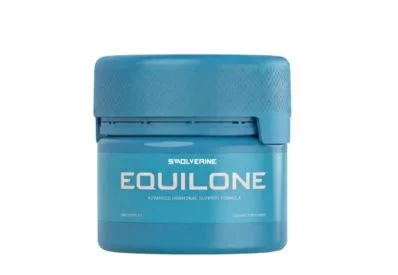
Swolverine Equilone® may help support overall hormonal balance and estrogen metabolism. It's designed for advanced athletes who already vigorously track their training, nutrition, and recovery and are looking to maintain hormonal wellness with a non-prescription supplement.
Main Takeaways
- Swolverine Equilone® is intended for athletes and individuals who already have their training and nutrition dialed in; it is not a supplement for beginners or general fitness enthusiasts.
- Equilone® offers a fully transparent label with exact dosages of each ingredient and is third-party tested for the presence of heavy metals. However, some ingredients may still be underdosed.
- As always, we recommend consulting with a physician before taking this or any other supplement.
RELATED: Swolverine Kre-Alkalyn Review
Swolverine Equilone® Specs
| Price Per Serving | $2.17 (drops down to $1.84 if you sign up for automatic deliveries) |
| Serving Size | 3 capsules |
| Key Ingredients | Zinc (25mg), resveratrol (250mg), indole-3-carbinol (200mg), diindolylmethane (300mg) |
| How To Use | Take 3 capsules daily with a meal; you may take 2 capsules in the morning and 1 capsule at night if desired |
| Third-Party Testing | Yes, by Light Labs |
How Swolverine Equilone® Works
Equilone® works differently from aromatase inhibitors and selective estrogen receptor modulators (SERMs) in a few key ways.
- Aromatase inhibitors reduce the conversion of testosterone to estradiol.
- SERMs influence how estrogen receptors function.
- Metabolism-support compounds aim to influence the processing and clearing of estrogen.
Equilone® leans into the third category. The formula contains diindolylmethane (DIM) and indole-3-carbinol (I3C), compounds found in cruciferous vegetables like broccoli and cabbage. Researchers have found that these compounds may influence how the body metabolizes and processes estrogen, rather than blocking aromatase directly or suppressing estrogen production itself. (2)
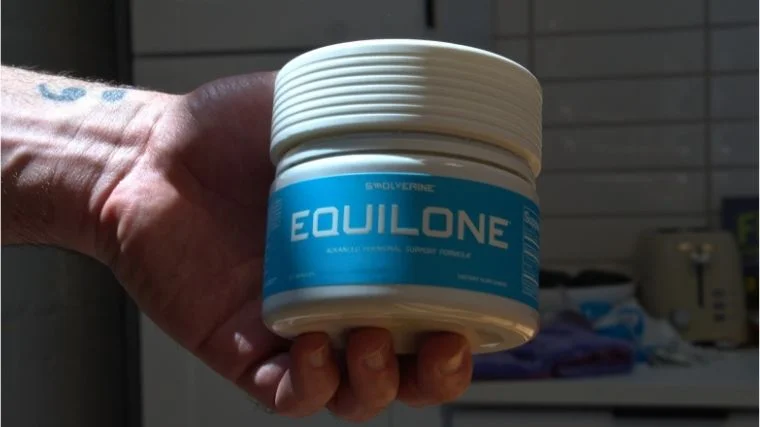
Equilone® also includes plant compounds (called polyphenols), which have been studied for their potential effects on hormone signaling and enzyme activity. A study published in Cancer Research shows that some polyphenols, including resveratrol, have demonstrated selective estrogen receptor activity in vitro. (3)
That doesn’t make Equilone® a pharmaceutical drug — it suggests that Equilone® may play a role in supporting healthy estrogen metabolism and balance.
For strength athletes and physique competitors, this type of approach may be appealing
because it aims to promote hormonal balance rather than override physiology.
Who It’s For
Equilone® isn’t intended for beginner bodybuilders or casual gym-goers. What it may offer is incremental support for athletes trying to maintain hormonal steadiness under stress.
Sydney Lappe, MS, RDN, LDN, notes that “Equilone®is likely safe for healthy adults when used as directed, but hormone-related supplements warrant caution, especially without strong clinical backing.”
With that in mind, here’s who should and should not consider taking Equilone®.
Recommended for:
- Intermediate to advanced lifters
- Athletes entering aggressive fat loss phases
- Individuals tracking bloodwork and looking for measured support
- Those seeking estrogen management without pharmaceutical intervention
Not recommended for:
- Those wanting a substitute for prescription hormone therapy
- Individuals needing to treat medical conditions
- Anyone looking for dramatic, immediate changes
RELATED: How Being Stressed Can Affect Your Strength Training
Ingredient Quality and Dosing Analysis
When reviewing a hormone-support supplement, we look at three things:
- Are the ingredients relevant?
- Are they dosed meaningfully?
- Does the formula make physiological sense?
According to Lappe, “The ingredient selection in Equilone® is generally reasonable, with compounds that have some mechanistic or early research related to estrogen metabolism. However, there’s a lack of well-established efficacious dosages for this specific ingredient combination.”
With that in mind, let’s analyze the key ingredients in Equilone® and their intended purposes.
DIM and I3C Class Compounds for Metabolism Support
Equilone® includes DIM / I3C class compounds, which are widely used in estrogen metabolism supplements. A study published by Michnovicz et al. in the Journal of the National Cancer Institute shows indole supplementation can affect estrogen metabolism. (2)
The key here is expectation management. These compounds influence metabolite pathways; they are not aromatase inhibitors.
Clinically relevant doses of standalone DIM products are typically in the range of 100 to 300 milligrams per serving. Research also suggests that dosages between 50 and 400 milligrams of I3C per day may be safe for healthy individuals. (4)
A serving of Equilone® provides 300 milligrams of DIM and 200 milligrams of I3C, which align with industry standards.
RELATED: How to Boost Your Metabolism
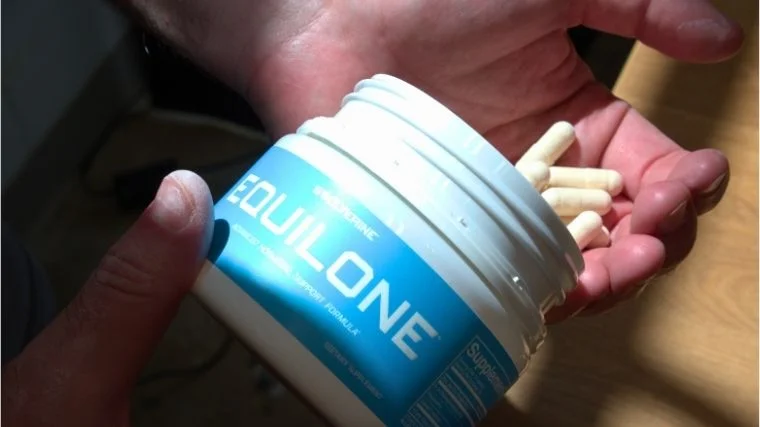
Polyphenols and Flavonoids for Receptor Interaction
Equilone® contains polyphenols and flavonoids, naturally occurring plant compounds that may support health and influence the body’s response to certain hormones.
As mentioned earlier, some plant compounds, including resveratrol and certain flavonoids, have been studied for their ability to interact with estrogen receptors. (3) However, these effects appear to be subtle and are not comparable to prescription medications.
Additionally, the 250 milligrams of resveratrol in Equilone® falls short of the 500-milligram, twice-per-day dosage recommended by research. (5)
It’s also important to note that these ingredients don’t work like prescription estrogen blockers. Their inclusion in Equilone® is intended to support hormone balance in a more gradual way rather than aggressively reducing estrogen levels.
RELATED: Swolverine Whey Isolate Protein Review
Cofactors for Micronutrient Support
Each serving of Equilone® provides 25 milligrams of zinc bisglycinate. According to Lappe, “Zinc bisglycinate is a highly-absorbable chelated form of zinc.” In other words, it’s a form of zinc that can be easily absorbed by the body and may be gentler on the digestive system than other forms.
Zinc is a cofactor, meaning it’s an essential molecule that helps an enzyme function properly. It isn’t an estrogen blocker, but it does play an important role in overall hormone function. Research has shown that zinc deficiency in men is associated with reductions in testosterone, with testosterone levels rising again once zinc levels increase. (6)
As such, zinc’s inclusion in Equilone® appears intentional, not random.
However, as Lappe points out, the zinc content in Equilone® may be a cause of concern for individuals already taking a zinc supplement. “The 25 milligrams of zinc is pretty hefty,” she notes. “This is the same amount the European Food Safety Authority defines as the tolerable upper intake level.”
RELATED: Best ZMA Supplements
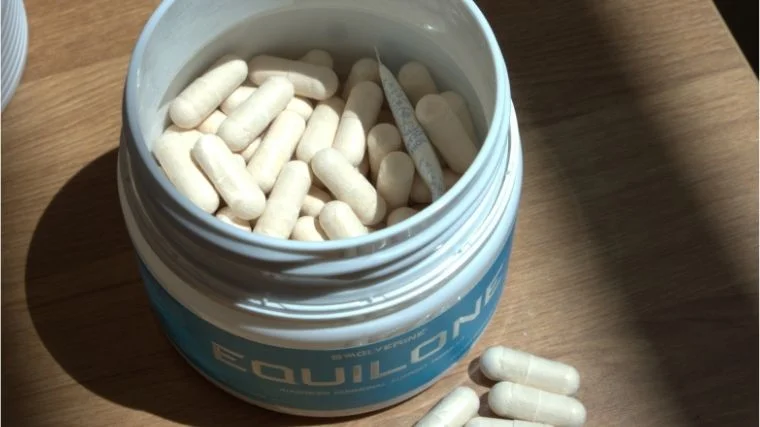
How Equilone® Compares to Standalone DIM Products
Many products in this category are essentially single-ingredient DIM capsules.
DIM alone may influence estrogen metabolite pathways, but it does not:
- Help balance estrogen activity at the receptor level
- Provide micronutrient endocrine support
- Offer broader metabolic support
Equilone® may bridge that gap.
Whether that added complexity translates to noticeable, real-world impact will depend on user context — especially training load, caloric intake, and baseline hormone levels.
RELATED: Best Muscle Recovery Supplements
Final Verdict: Is Swolverine Equilone® Worth It?
Research consistently shows that estradiol is essential in men for body composition, libido, and bone health. (1)
Given that, a strategy centered on balance rather than elimination is arguably the more
sustainable one.
For athletes who understand that hormone management is about stability, not extremes,
Equilone® presents a measured approach.
No supplement can produce the same effects as a pharmaceutical drug. However, if you’re an advanced lifter looking for a structured, metabolism-focused estrogen support formula that respects physiological balance rather than suppression, Equilone® may be worth considering.
Swolverine Equilone® Review: FAQs
Why do bodybuilders take estrogen blockers?
Bodybuilders often take estrogen blockers to counteract the effects of anabolic steroids, which can cause the body to convert excess hormones into estrogen. Too much estrogen can result in health issues such as muscle tissue degradation or the unwanted development of breast tissue in boys or men. (7)
Do estrogen blockers make you leaner?
Are estrogen blockers healthy?
When prescribed under a doctor’s guidance, estrogen blockers can be healthy. However, they may pose some health risks, such as increased joint pain, an increased risk of insulin resistance, or a decline in bone mineral density. (10)
References
- Finkelstein JS, Lee H, Leder BZ, et al. Gonadal steroid–dependent effects on bone turnover and bone mineral density in men. J Clin Invest. 2016;126(3):1114-1125. doi:10.1172/JCI84137.
- Ferrari AC, Stone NN, Stock RG, et al. Prospective analysis of prostate-specific markers in pelvic lymph nodes of patients with high-risk prostate cancer. J Natl Cancer Inst. 1997;89(20):1498-1504. doi:10.1093/jnci/89.20.1498.
- Lubomierski N, Kersting M, Bert T, Muench K, Wulbrand U, Schuermann M, Bartsch D, Simon B. Tumor suppressor genes in the 9p21 gene cluster are selective targets of inactivation in neuroendocrine gastroenteropancreatic tumors. Cancer Res. 2001;61(15):5905-5910.
- Centofanti F, Buono A, Verboni M, et al. Synthetic Methodologies and Therapeutic Potential of Indole-3-Carbinol (I3C) and Its Derivatives. Pharmaceuticals (Basel). 2023;16(2):240. Published 2023 Feb 5. doi:10.3390/ph16020240
- LiverTox®: Clinical and Research Information on Drug-Induced Liver Injury [Internet]. Bethesda (MD): National Institute of Diabetes and Digestive and Kidney Diseases; 2012-. Resveratrol. [Updated 2024 Nov 30]. Available from: https://www.ncbi.nlm.nih.gov/books/NBK548465/
- Prasad AS, Mantzoros CS, Beck FW, Hess JW, Brewer GJ. Zinc status and serum testosterone levels of healthy adults. Nutrition. 1996;12(5):344-348. doi:10.1016/s0899-9007(96)80058-x
- Patel S, Homaei A, Raju AB, Meher BR. Estrogen: The necessary evil for human health, and ways to tame it. Biomed Pharmacother. 2018;102:403-411. doi:10.1016/j.biopha.2018.03.078
- Sestak I, Harvie M, Howell A, Forbes JF, Dowsett M, Cuzick J. Weight change associated with anastrozole and tamoxifen treatment in postmenopausal women with or at high risk of developing breast cancer. Breast Cancer Res Treat. 2012;134(2):727-734. doi:10.1007/s10549-012-2085-6
- Springer AM, Foster-Schubert K, Morton GJ, Schur EA. Is there evidence that estrogen therapy promotes weight maintenance via effects on leptin?. Menopause. 2014;21(4):424-432. doi:10.1097/GME.0000000000000117
- Boszkiewicz K, Piwowar A, Petryszyn P. Aromatase Inhibitors and Risk of Metabolic and Cardiovascular Adverse Effects in Breast Cancer Patients-A Systematic Review and Meta-Analysis. J Clin Med. 2022 May 31;11(11):3133. doi: 10.3390/jcm11113133. PMID: 35683517; PMCID: PMC9181297.
