

Bodybuilding is all about finding the right tool for the job. Whether that be a flavor of whey protein that suits your palate, a pair of knee sleeves that are just tight enough, or — and especially — performing the best possible exercises during your workouts to encourage muscle growth.
While you probably don’t need to be sold on the merits of, say, the bench press or biceps curl, there are some movements that could be flying under your radar in a bad way.
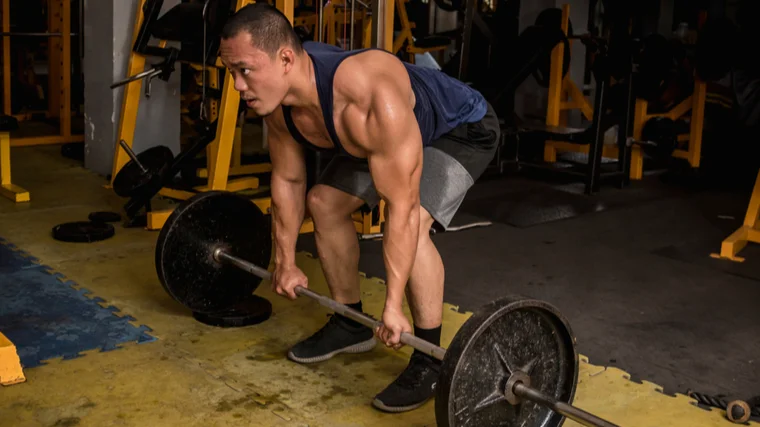
After all, not every exercise is created equal. In fact, some popular movements you may have included in your workouts for years could be holding you back in more ways than you think. If you’re looking to renovate your workout routine, these 10 movement might be worth putting on the chopping block.
Worst Bodybuilding Exercises
- Deadlift
- Barbell Row
- Behind-the-Back Shrug
- Smith Machine Squat
- Upright Row
- Cable Squat
- Rack Pull
- Landmine Press
- Plank
- Good Morning
Editor’s Note: The content on BarBend is meant to be informative in nature, but it should not be taken as medical advice. When starting a new training regimen and/or diet, it is always a good idea to consult with a trusted medical professional. We are not a medical resource.
First, a Disclaimer
There’s no such thing as a flat-out “bad” exercise. With enough working knowledge of your own anatomy, tolerance to movement, and the why behind your workout routine, you can reasonably justify the inclusion (or frankly, exclusion) of any lift under the sun.
As such, a “bad bodybuilding exercise” is more of a thought experiment than a blanket prescription. This list is meant to encourage you to analyze your habits and choices more closely, instead of just plugging in movements because your favorite coach or athlete adores them.
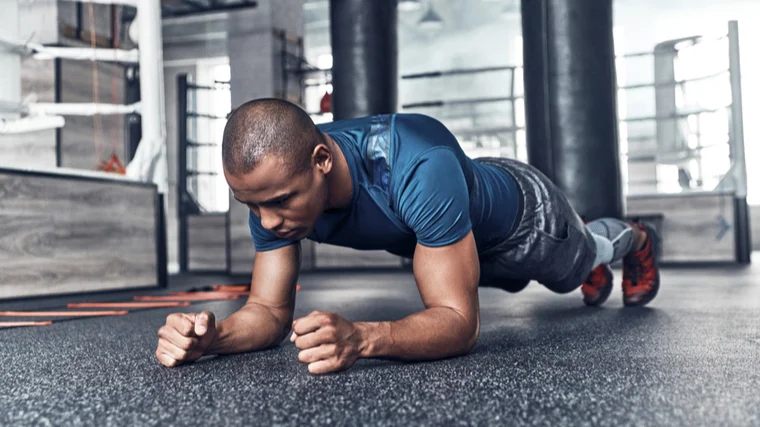
The technique, setup, or performance of some lifts might make them less than ideal for hypertrophy, but that doesn’t mean you should never perform them — especially if you find they work well for you.
Deadlift
Before you get too riled up, take a breath. There’s no denying that the deadlift is one of the most high-value exercises you can perform in the gym, period.
The list of its strengths is far, far longer than its weaknesses — but that doesn’t mean it’s the perfect exercise for everyone, all the time, particularly those who are chasing more muscle mass.
Why It’s Bad
From a purely hypertrophic standpoint, the standard deadlift leaves something to be desired. First and foremost, heavy deadlifts generally lack a meaningful eccentric phase. Secondly, the stronger of a puller you are, the longer you’ll have to spend warming up and ramping up to your working sets — which robs you of both time and energy.
And, finally, while the deadlift does technically activate nearly every muscle in the body, most of that tension is applied isometrically.
Isometric tension deprives the muscle of a stretch-shortening cycle, which is considered integral to accruing muscle damage. (1)
Instead, Try…
If you currently utilize the deadlift as the centerpiece of your leg days, consider swapping it out for the barbell hip thrust instead. Hip thrusts let you load up on heavy weights, but put all that tension squarely on your hamstrings and glutes.
On the other hand, if you start your back days off with deadlifts, try out snatch-grip Romanian deadlifts, power shrugs, or Kroc rows instead for some back-focused overloading.
Barbell Row
Some of the strongest and biggest bodybuilders ever relied heavily on the barbell row to build their backsides. Does that mean it’s the end-all, be-all of lat training? Not necessarily.
Why It’s Bad
The barbell row has almost all the parameters of an ideal hypertrophy exercise. It’s progressible, aligns with the fibers of your lats, and applies a high degree of mechanical tension.
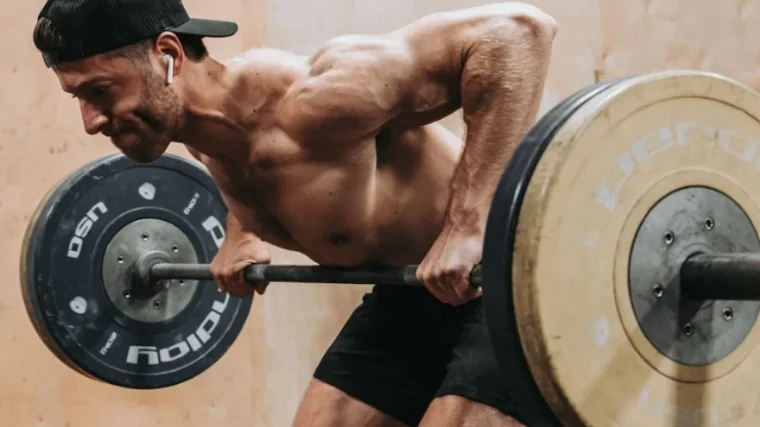
However, the barbell row suffers from the massive amount of stability and stress the exercise places on your lower back and hips. In fact, the postural control of your posterior chain can often be the limiting factor of the movement, not how strong your lats are.
This could add up to gains left on the table for the wrong reasons.
Instead, Try…
If you can address the lumbar spine stress inherent to the barbell row, you have yourself one heck of a back builder.
To that end, any form of chest support will take tension off your hips and let you focus on contracting your lats and traps. The best and most direct way to accomplish this is with the seal row.
Alternatively, a chest-supported T-bar row, if your gym has the equipment for it, works too.
Behind-the-Back Shrug
Everyone loves a good shrug. Your upper trapezius muscles really only function to elevate your shoulder, so if you want to beef up your yoke, you’ll have to shrug in some form.
While popular, behind-the-neck shrugs have one (okay, maybe two) glaring issues that get in the way from time to time.
Why It’s Bad
Plain and simple, behind-the-back shrugs are awkward to set up and carry out. You either have to lift a barbell off a rack in a strange manner, or unhook a Smith bar from the safeties.
Further, depending on the length of your arms, the bar you’re working with might collide with your glutes and artificially limit your range of motion.
Instead, Try…
There’s no reason to overcomplicate shrugs. To keep it simple, you should start with the tried-and-tested dumbbell shrug.
Dumbbell exercises let you work each of your traps independently to address imbalances if needed, and also afford more freedom of movement as there’s no barbell to collide with any part of your anatomy along the way.
Smith Machine Squat
The Smith machine catches a bad rap from time to time. Most of that vitriol is undeserved. If you’re new to the gym, or just need a bit of added stability, the Smith is a fantastic choice.
However, for an exercise as complex and individualized as the back squat, the Smith machine is far from ideal.
Why It’s Bad
Your bone structure, limb length, and soft tissue mobility all strongly impact how you squat. No two back squats will ever look exactly the same — there are simply too many moving parts in play.
As such, the bar on your back should be unbound to a rack and work with you, not against you. The fixed rail of the Smith machine can make it difficult to get tactile feedback from the weight. You also may find it difficult to move comfortably and naturally.
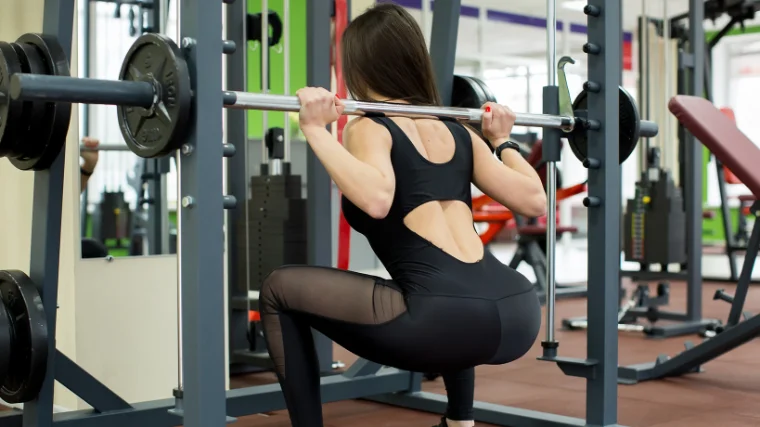
Moreover, the path your barbell takes when you descend into a squat won’t always be perfectly vertical, but the design of the machine can force you to descend in a manner that your body won’t necessarily comply with.
Instead, Try…
If you’re stuck working your legs in a Smith machine, fret not. You can make a small adjustment to your setup and get much more value out of the machine by switching to a Smith machine hack squat instead.
The hack squat isn’t as restrictive about bar path as a back squat is, so you should be able to perform it comfortably in a way that aligns with your structure.
Upright Row
It’s not the shoulder-killer some gym bros espouse it to be, but the upright row certainly poses some risks for those not blessed with exceptional scapular mobility.
Nevertheless, you probably see upright rows all the time in the gym. So, what’s the deal?
Why It’s Bad
No movement pattern is inherently injurious. That said, extreme joint angles (coupled with sufficient external resistance that you may not be accustomed to) can contribute to acute injuries.
You need a great deal of shoulder internal rotation capability to perform an upright row with proper range of motion. It’s also a relatively “delicate” position for the glenohumeral joint, which makes substantial progressive overload hard to achieve.
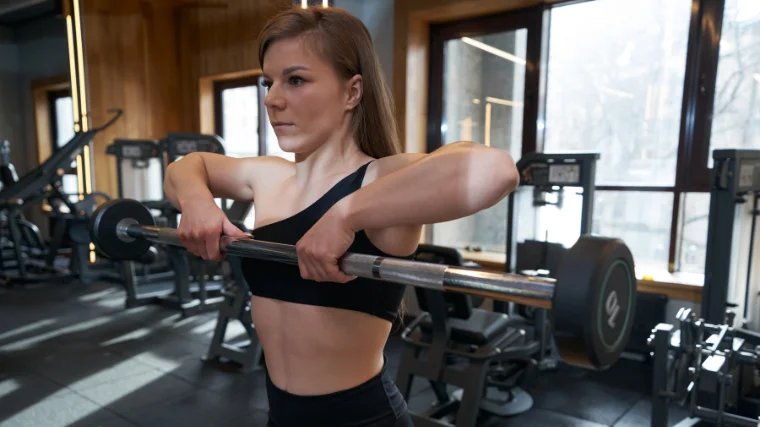
The exercise does target a nice mix of your upper body at once, true enough. But there are better, more reliable ways to hit your traps, lateral delts, and brachialis.
Instead, Try…
Whether upright rows cause discomfort in your shoulder, elbow, or wrist or not, you might want to swap the exercise out for something that is more comfortable and easy to load. In that vein, try out the cable face pull with a rope attachment, or a resistance band pull-apart.
If you want to work with a barbell on a similar movement pattern, a wide-grip bent-over row where you pull “high” with flared elbows will do the trick as well.
Cable Squat
You can do just about anything with a cable tree. Cable work is fantastic for bodybuilding for its versatility and applicability to just about any muscle or muscle group. Not to mention the consistent, reliable tension the fixture provides.
However, the cable squat — where you hold onto a bar attachment fixed at a low angle and squat — is one of the few movements that may qualify as a straight-up waste of your time.
Why It’s Bad
All squats have one thing in common. The weight of gravity pushes the object (and your body) downward, which you sink into and then resist by standing back up.
The cable squat turns this on its head — your body flexes and extends vertically, but the resistance is pulling you forward. This misalignment makes it quite difficult to properly assign tension to your quads and glutes.
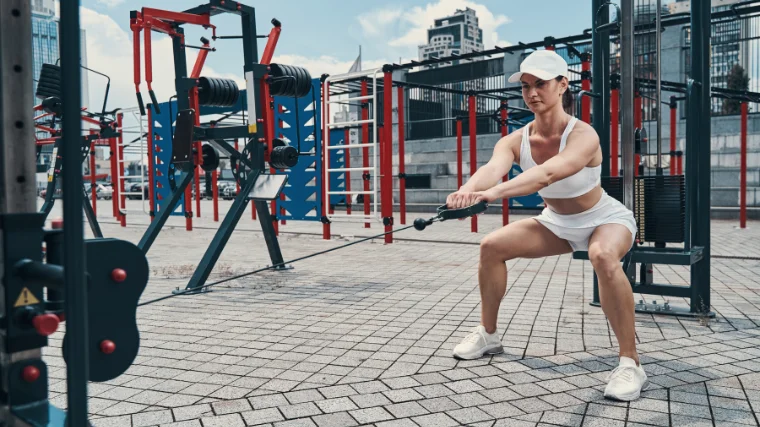
Cable squatting may have some use as a low-level teaching tool, since the attachment can serve as a counterweight that helps a beginner balance themselves as they sit and stand.
For optimal muscle growth, though? That dog don’t hunt.
Instead, Try…
If your gym has access to it, you can get much better leg activation with some external support from the belt squat. This exercise can also be fashioned to work on a cable attachment, but you’ll need to elevate your feet. The setup can take more time than the exercise itself.
Alternatively, you can also give Spanish squats a try as long as you have an extra-thick resistance band to loop behind your knees. Spanish squats have a similar overall posture to the cable squat, but you can hold a dumbbell or kettlebell aloft to put the tension in the right places.
Rack Pull
It’s easy to look at some of the most successful strongmen in the world and conflate their deadlift prowess with massive traps. The two do go hand-in-hand, but that doesn’t necessarily mean ultra-heavy pulls are practical for hypertrophy in all cases.
Why It’s Bad
Rack pulls from knee level or slightly above are just about the best way to apply the most tension possible to your upper back. The extreme weights you’ll be able to use will attempt to tear your arms off your body, forcing your shoulder girdle and trapezius into overdrive to stabilize everything.
However, rack pulls are still an isometric exercise for your traps. More importantly, they can be impractical to perform in most commercial gyms.
They’re loud, you’ll need a lot of plates, and you’re liable to damage the equipment you’re using since you may not be inclined to set the barbell down gently after a grueling set to near-failure.
Instead, Try…
If you want to pulverize your traps without exhausting your grip or potentially damaging a piece of gym equipment, there are alternatives to the rack pull.
You can grab a pair of straps and perform power shrugs — meaning, momentum-assisted — with dumbbells. Or, load up a trap bar and bang out a set of trap bar shrugs. Just make sure to set the frame down when you’re done instead of dropping it.
Landmine Press
Landmine work — where you wedge the end of a barbell into a corner or a sleeve designed for it — is great for a few things. It provides access to unique movements you couldn’t perform otherwise, and lets you use a barbell in a refreshing way if you’re a bit bored with your current routine.
For chest and shoulder growth? The landmine press leaves something to be desired.
Why It’s Bad
Most people perform landmine presses from a full or half-kneeling position, either one arm at a time or working concurrently together. The exercise falls short in two key areas.
First, a half-kneeling (or even standing) position necessitates that a portion of your energy and focus goes toward stabilizing your trunk and hips, energy that could be applied to the muscle you’re trying to work.
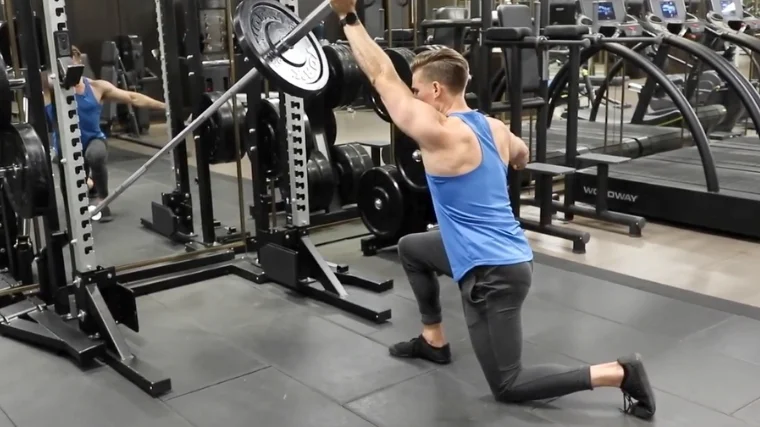
Research also suggests that working in unstable conditions is less than ideal for hypertrophy, if that’s your primary goal. (2)
Second, the resistance curve of a landmine isn’t consistent. You’ll find that the closer your arms come to extension, the easier it is. Meaning, when your pecs and delts are contracting hardest, there’s little to no tension on the tissue.
Instead, Try…
If you previously used the landmine press as a shoulder-builder, don’t be afraid to go back to basics and perform a neutral-grip dumbbell overhead press instead. Should you really want some extra core work, do the exercise standing instead of seated.
For chest growth, substitute the landmine press for an incline hex press instead. Pressing two dumbbells together adds some nice isometric tension, and you still get even tension from the dumbbells themselves all the way through.
Plank
A shredded, defined midsection is among the most-desired features people pursue in the gym. However, abs are really displayed as a result of your diligence in the kitchen, not the weight room.
But you need to build them first. And if you’ve been relying primarily on the plank to do so, you might want to reconsider your choices.
Why It’s Bad
The plank is a phenomenal teaching tool. It forces you into a hollow-body position, which properly aligns your pelvis and ribcage. Beyond that, it’s a great test of full-body tension as well as willpower.
However, the standard plank is both impractical to progress and lacks the stretch-shortening cycle integral to creating substantial muscle damage. After a few weeks of practice, even a minute-long plank might be easy pickings for you.
To continue getting value from the movement, you have to amplify it in some way. You can try single-arm or long-lever planks, which are inordinately more difficult, or attempt to load a weight plate on your back and balance it. Neither are convenient.
Instead, Try…
If planks are easy for you, or you don’t want to ask someone to stick a plate on your backside every set, you can sub the movement out for something more practical.
The ab wheel rollout challenges your core in a similar manner, but is much more difficult, and has the added benefit of being an exercise you can push your rep count or tempo on.
Alternatively, pick something more dynamic like a cable crunch. Cable crunches apply consistent tension to your abs, and you can dial up (or down) the difficulty quickly.
Good Morning
The ever-so-graceful good morning exercise is almost a great posterior chain builder. On paper, it has a lot going for it. But in practice, the movement leaves something to be desired, especially with regard to safety and progression.
Why It’s Bad
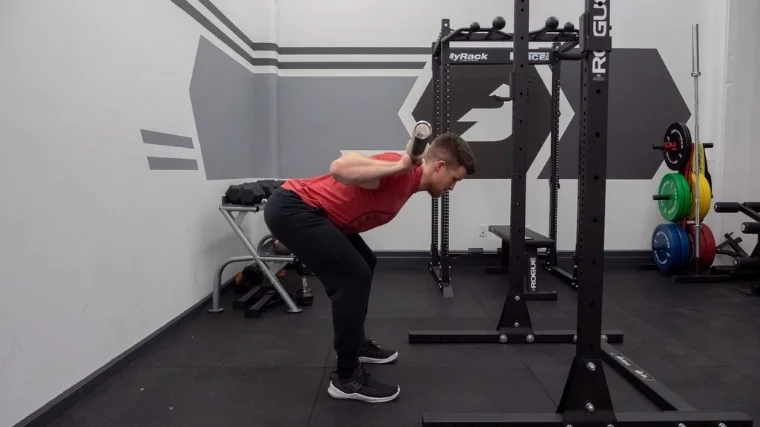
One of the good morning’s biggest assets — the resistance (a barbell) being far from the joint that’s working (your hips) — is also its most dangerous feature.
Sinking into a deep hinge with a bar on your traps is quite difficult, even if that bar isn’t loaded with any weight at all. However, getting out of the set should something go awry is more than a little dangerous. As such, the good morning is a difficult exercise to push your intensity on.
[Read More: Best Upper Chest Exercises for Building Muscle]
Not every exercise is meant for ultra-heavy lifting, but even a “light” set of good mornings can get dicey if you accumulate enough fatigue during the set.
Instead, Try…
If you want to blast your backside without using a lot of weight, you can turn to something like a single-leg Romanian deadlift instead. You’ll still perform a standard hinge, but working on one leg makes it all the more challenging.
You can also remove the stability demand by using your spare arm to grab onto a stable surface. This lets you worry about what matters — contracting and squeezing your glute on every rep, instead of wondering if you’ll lose your balance.
Optimize Your Everything
For the best results in any endeavor, you need to work with the best tools at your disposal. This is as true in bodybuilding as it is in carpentry or artwork.
While just about any exercise under the sun will be appropriate for somebody, some movements just don’t have a lot going for them for the average gymgoer. This doesn’t mean you should write them off, but it should be enough of a reason to audit your workout routine.
If you want to grow as much muscle as possible, make sure the movements in your repertoire are the best of the bunch. Ditch the dead weight and the results will speak for themselves.
References
- Schoenfeld B. J. (2010). The mechanisms of muscle hypertrophy and their application to resistance training. Journal of strength and conditioning research, 24(10), 2857–2872.
- Behm, D. G., Drinkwater, E. J., Willardson, J. M., Cowley, P. M., & Canadian Society for Exercise Physiology (2010). Canadian Society for Exercise Physiology position stand: The use of instability to train the core in athletic and nonathletic conditioning. Applied physiology, nutrition, and metabolism = Physiologie appliquee, nutrition et metabolisme, 35(1), 109–112.
Featured Image: MilanMarkovic78 / Shutterstock
