

Who says you need a barbell to squat hard and heavy? The goblet squat is a powerful leg-building option for lifters of any caliber. It’s perhaps especially useful for folks who struggle with maintaining correct form during barbell squats.
The goblet squat is relatively hard to mess up, as it’s a fantastic squat patterning movement. It’s also dynamite for postural and core strength. By securing the dumbbell in front of your chest, you’ll be recruiting all your core stability to keep yourself upright. Your upper back and shoulders will also feel the burn — hanging onto that weight doesn’t happen magically.
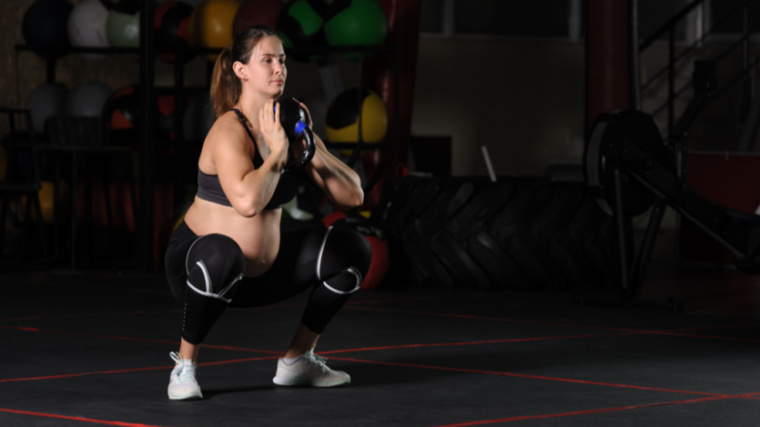
Goblet squats can be a key component of learning how to squat to depth, how to keep your knees aligned during your squat, and even how to develop a strong front rack. But the original goblet squat isn’t the only king of dumbbell leg exercises. Check out these 10 goblet squat variations to challenge your legs, core and lungs in a unique way.
Best Goblet Squat Variations
- Landmine Goblet Squat
- Goblet Box Squat
- Heels-Elevated Goblet Squat
- Kettlebell Goblet Wall Sit
- Bottoms-Up Kettlebell Goblet Squat
- Sumo Goblet Squat
- Goblet Bulgarian Split Squat
- Goblet Squat With Lowering
- Resistance Band Goblet Squat
- 1 ¼ Goblet Squat
Landmine Goblet Squat
Like a goblet squat with a free weight, landmine squats are loaded anteriorly. But because the landmine is anchored, you’ll get extra assistance for your core. Squatting while holding a barbell attached to the floor allows you to keep your core rigid and maintain a neutral spine with a bit more ease.
With a landmine, the weight — like your feet — is also connected to the floor. This provides you more stability, which can come in handy if you’re recovering from an injury or are just learning the squat pattern.
Benefits of the Landmine Goblet Squat
- This move helps you learn to squat without rounding your back and automatically fire up your core.
- Landmine goblet squats help build lower body strength and muscle without putting stress on your lower back.
- Advanced lifters who are working on their barbell front squats can add landmine goblet squats to their program for extra leg work without extra low back loading.
How to Do the Landmine Goblet Squat
Set up your barbell by putting one end safely in the landmine attachment. If you’re adding plates, load them on the end that’s facing you. Squat down and grip the end of the barbell with both hands. Bring your hands to chest level. If you need to accommodate your chest, angle your elbows slightly out in front of you instead of tucking them to the side. Brace your core and take an inhale. Exhale as you drive the floor away to stand up. Push through your entire feet with extra emphasis in your heels. Squeeze your glutes at the top. Repeat.
Goblet Box Squat
How deep should a squat be? It depends on your anatomy and your goals. For powerlifters, you’ll need to break parallel — your thighs sinking lower than parallel with the ground — to have your lift count in competition. A helpful way to train this depth is to use a box to squat down onto before standing back up.
It gives your brain an idea of where you’re going, and it’s a chance to re-engage your muscles before you stand back up. This helps you learn to build and maintain tension without the benefit of momentum or a stretch reflex.
Benefits of the Goblet Box Squat
- When learning the proper mechanics of a squat, the cue to simply “sit down” can be helpful to see how your body naturally wants to squat. You can tweak your form from this basis.
- By focusing on sitting back and down onto a box, the goblet box squat will work your posterior chain and help to strengthen your hamstrings and glutes.
- You can lower your box height if you are working on squatting deeper, and practice box squats at greater depths before progressing without the box.
How to Do the Goblet Box Squat
Grab your kettlebell or dumbbell and stand slightly in front of a plyo box or weight bench. Hold the weight into your chest, angling your elbows out in front of you instead of down by your sides if need be. Hinge your hips back slightly as you sit down onto the box. When your glutes touch the box, hold onto your tension. Push into your feet and stand back up.
Heels-Elevated Goblet Squat
Do you have trouble keeping your heels down when you try to squat? This can be caused by tight calves or limited ankle and hip mobility. When squatting down, your shins may well come forward as your ankles and hips flex. You’ll keep your feet on the ground — which can be hard without the requisite lower limb mobility.
If you’re working on your mobility training, you can still squat by slightly elevating your heels during your squats. This takes the stress off of your ankles and calves so you can still safely work your squatting pattern with your feet pushing onto a surface. It’s just elevated instead of the flat ground.
Benefits of the Heels-Elevated Goblet Squat
- This move helps you squat deeper despite a limited range of motion in your hips and ankles.
- Bodybuilders can try this variation to target and work their quads.
- The heels-elevated goblet squat will also require more core engagement to keep your torso upright — another great leg-based core exercise.
How to Do the Heels-Elevated Goblet Squat
Take two low bumper plates and set them up next to each other. Assume your regular squat stance. Elevate your heels onto the plates with your toes on the ground. Hold your kettlebell into your chest with your shoulders depressed and elbows tucked in or slightly angled forward. Sink into your squat. Your base of support is now split between the plates and the floor, so try your best to continue pushing through your entire feet.
Kettlebell Goblet Wall Sit
Isometric holds are a great way to build strength and muscular endurance — though they will definitely burn. In a wall sit, you’re holding the position of a 90-degree squat with your back supported by the wall. These are going to work your quads, abs, and glutes.
Add a kettlebell at your chest for more resistance and to work your upper body, as well. Your lungs, core, and legs will all burn out pretty quick.
Benefits of the Kettlebell Goblet Wall Sit
- A goblet wall sit will isolate your quads, helpful for strength athletes and bodybuilders.
- If you are unable to dynamically squat, a wall sit may help you build strength and muscle.
- Isometric exercises require you to hold full tension and engagement for the entire length of the exercise.
How to Do the Kettlebell Goblet Wall Sit
Stand about a foot in front of a wall with your feet about shoulder-distance apart. Lift your kettlebell with your hands on either side of the horns. Keep your shoulders back and down. Lean your back and head against the wall with your feet out in front of you. Plant those feet on the ground as you slide your body down until your thighs are parallel with the floor. Drive your heels and feet into the ground. Keep your knees away from each other and squeeze your quads, hamstrings, and glutes. Hold this position for time.
Bottoms-Up Kettlebell Goblet Squat
When you are comfortable with the kettlebell goblet squat, try flipping the kettlebell over so the bottom of the weight faces the ceiling. Holding the kettlebell “bottoms up” is a major challenge for balance and stability.
Start with lighter weights until you know your upper body — particularly, your forearms and grip strength — can handle the balance challenge.
Benefits of the Bottoms-Up Kettlebell Goblet Squat
- Holding the kettlebell upside down will require your body to work harder to maintain core tension
- This balance-challenging move can help you get more out of your squats without increasing the weight.
- The bottoms-up position will work your upper body more, leveling up the goblet squat to even more of a full body exercise than it already is.
How to Do the Bottoms-Up Kettlebell Goblet Squat
Hold a kettlebell upside down, with the bottom of the bell facing the ceiling. Have one hand on each side of the horns. Keep your shoulders back and down. Allow for some wobbling and take a second to find your balance. Inhale. Sit back and down so your thighs come at least parallel to the floor. Avoid letting the bell pull you forward. Exhale as you press the floor away with your feet, squeezing your glutes when you come to standing. Repeat for reps.
Sumo Goblet Squat
What’s the right stance for a goblet squat? It usually calls for a narrow stance, with feet about hip’s distance apart. Depending on their anatomy, some folks are more comfortable with a slightly wider stance. Enter the sumo goblet squat. This is when your feet are stepped wider than your hips, with your toes pointed out.
[Read More: The Best Ab Exercises & Workouts, According to a CPT]
The sumo goblet squat with a kettlebell allows you to reap the upper body benefits of a traditional kettlebell goblet squat, but with a few added perks.
Benefits of the Sumo Goblet Squat
- The sumo stance will work your adductors (inner thighs) more than a narrow stance, and these smaller muscles are often underworked.
- If you have tight hips and legs, this may feel like quite a stretch. Continuing to work on it as you add weight can help improve your hip mobility over time, and help you to squat deeper.
- Sumo goblet squats allow you to lift heavier with less stress on your lower back — this is great for powerlifters and anyone looking to lift heavier and build strength while allowing more room for low back recovery.
How to Do the Sumo Goblet Squat
Step your feet out wider than hip width’s distance. Turn your toes slightly out. Brace your core and maintain a neutral spine as you sit back and down. Hold tension at the bottom and exhale to push the floor away through your feet. Stand tall by squeezing your glutes. Reset and repeat. Note: you may need to hinge back a little more than a narrow stance goblet squat before sitting down into it due to the wider stance.
Goblet Bulgarian Split Squat
The Bulgarian split squat is a beast of a movement. It’s a split squat, but with your back foot elevated instead of on the ground. That’s going to present a huge challenge to your balance, your unilateral leg strength, and even your hip mobility.
Single-leg exercises like this one help even out muscle or strength imbalances in your lower body. This move will also present a significant balance challenge, which will translate well into greater stability under a barbell.
Benefits of the Goblet Bulgarian Split Squat
- Unilateral exercises address imbalances between sides and help to focus and strengthen one side at a time.
- The setup of the Bulgarian split squat will majorly challenge your single leg stability, balance, and hip mobility.
- The goblet Bulgarian split squat is a great alternative for advanced lifters who want to train barbell back squats but don’t have the equipment.
How to Do the Goblet Bulgarian Split Squat
Stand in front of a weight bench. Place your back foot (shoelace side down) on the bench behind you. Bring the front foot forward enough so your back leg will lower at around a 90-degree angle. Square both hips forward and find stability in your front foot. Pull your shoulders back and as you hold your kettlebell or dumbbell in the goblet position. Inhale and carefully lower towards the floor, thinking of driving your back knee straight down. Keep your front heel on the ground. When you reach the bottom of the position, stay engaged. Exhale and press into your front foot to stand straight up, squeezing your quads, hip flexors, and glutes at the top.
Goblet Squat With Lowering
This move is typically called a goblet squat with lowering, but goblet squat with biceps curl might be a more illustrative way to describe it to your gym buddy.
You’ll pause at the bottom of the squat to perform a curl that helps you own the hole of the squat position. It’ll create extra tension in your anterior core and posterior chain.
Benefits of the Goblet Squat With Lowering
- Owning the bottom position of the squat helps you to build tension in the correct form, and then challenges your core stability as you lower the weight.
- You get more bang for your buck — you’ll work your upper body and core while holding an isometric variation of a squat.
- This move helps you spend more time under tension, increasing your muscle-building potential.
How to Do the Goblet Squat With Lowering
Start with a slightly lighter weight than usual. Set up the beginning of your goblet squat with the kettlebell at your chest. Squat down and pause in the hole. Lengthen your arms to bring the kettlebell towards the floor. Curl it back up to your chest. Push the floor away to stand back up. Rinse and repeat.
Resistance Band Goblet Squat
Some gyms don’t have big enough kettlebells or dumbbells to challenge advanced lifters. Adding a resistance band helps.
This exercise is best done as an assistance exercise after your big strength movement of the day. You can also use a band on its own to help you warm up or prep for heavier lifts.
Benefits of the Resistance Band Goblet Squat
- The band will force you to slow down and control the eccentric part of the squat (the descent), which is beneficial for building strength and muscle.
- Fighting gravity plus the resistance of the band as you stand up for the concentric portion can be a substitute for heavier weights if you don’t have access to them.
- If you have no weights at all, you can hold the band by itself in the goblet position. That makes this move super convenient when traveling.
How to Do the Resistance Band Goblet Squat
Step your feet onto the resistance band, standing about hip’s width apart. Loop the other end of the band around your forearms. Bring your hands into the goblet position, either holding a dumbbell or just holding the band. Sit down into your squat slowly fighting that resistance. Stand up with power, pushing the floor away and squeezing your glutes at the top. Repeat.
1 ¼ Goblet Squat
Adding a quarter repetition to an already challenging rep may make you hate life — but the increased tension in your legs, anterior core, and your posterior chain will give you a lower body of steel.
https://youtube.com/watch?v=3M9zT3Lhk3s
[Read More: The Best Quad Exercises and Quad Workouts for Muscle Gain]
The 1 ¼ squat is a user-friendly option if you’re trying to progress your goblet squat without adding weight. It can also skyrocket your hypertrophy goals by adding a lot of time under tension and forcing you through any squat sticking points you might have.
Benefits of the 1 ¼ Goblet Squat
- Performing this move in the goblet position will present a huge challenge to your upper body and lower body all at once.
- More time under tension is great for building muscle and strength — the 1 ¼ squat will provide these in spades.
- If you are someone who tends to rush through your exercises, this will force you to slow down the tempo and get more out of your time.
How to Do the 1 ¼ Goblet Squat
Get your weight and set up for your goblet squat. Squat down as usual. Stand up about a quarter of the way, squat all the way back down, then stand all the way back up with control. Hold your tension through the ¼ rep and don’t rest or collapse at the bottom. Drive through your feet and maintain proper position of the weight at your chest. Repeat for reps.
Muscles Worked by the Goblet Squat
The goblet squat is a lower body, multi-joint movement that mainly works your quads and glutes — plus a big stretch for your calves. Because it is front loaded, it also works your anterior core. Holding the weight correctly works your lats and upper back muscles. So, it’s really a full body exercise disguised as a leg workout.
Quads
As you squat down, your quads will work to flex your knees and hips. They’ll also help you push through the floor to stand back up. Some variations, such as the heels-elevated goblet squat, will work your quads more due to the angle.
Glutes
Your glutes are responsible for extending your hips at the top of your goblet squat. Try to really drive through your feet as you stand up and actively squeeze your glutes as you come into hip extension.
Lats
Depressing your scapulae is key to holding your weight with proper tension. Your lats will work as you do that, helping to resist spinal flexion as you keep your torso upright.
How to Integrate Goblet Squats Into Your Program
Goblet squats are a fantastic exercise for beginners to advanced lifters. They are useful for many different goals, and there are many ways to add them into your program.
Add Goblet Squats to Your Warm-Ups
If you are lifting heavy, a goblet squat is a movement-specific warm-up for a heavier squat. If you’re training barbell front or back squats, the goblet squat is a way to warm up the movement and technique with a lighter load.
[Read More: Our Favorite Forearm Workouts, + the Best Forearm Exercises]
Goblet squats can also be part of a dynamic warm-up and help to improve mobility in your hips while stabilizing your spine.
Do a Superset with Goblet Squats
Supersets are a great way to save time in the gym, as well as increase the intensity of your workout depending on your goals. If you’re working a full body split, try pairing a goblet squat with a dumbbell bench press. That way, your hips and legs can rest (though they should still be irradiating tension) while you work your chest, back, and shoulders with the bench press.
Use Goblet Squats for your Main Lower Body Lift
For a beginner or advanced lifter, goblet squats can be the star of the show on your leg day. Make each rep perfect. Try a super heavy kettlebell if you are advanced, and train your grip strength at the same time. Start out your leg day with four sets of eight reps of heavy goblet squats — get ready to feel the burn.
Drink Up the Gains
No barbell? Not a problem. Whether you’re working with a dumbbell or a kettlebell, the goblet squat makes it possible to squat heavy without either a squat rack or a barbell. You can use it as a major leg day accessory or it might be your main knee-dominant lift. Either way, the goblet squat and goblet squat variations can help you raise the roof on your leg gains.
Featured Image:
